How PLEX Perspectives Shaped Tarkka’s Approach to Evidence, Adoption, and Market Entry
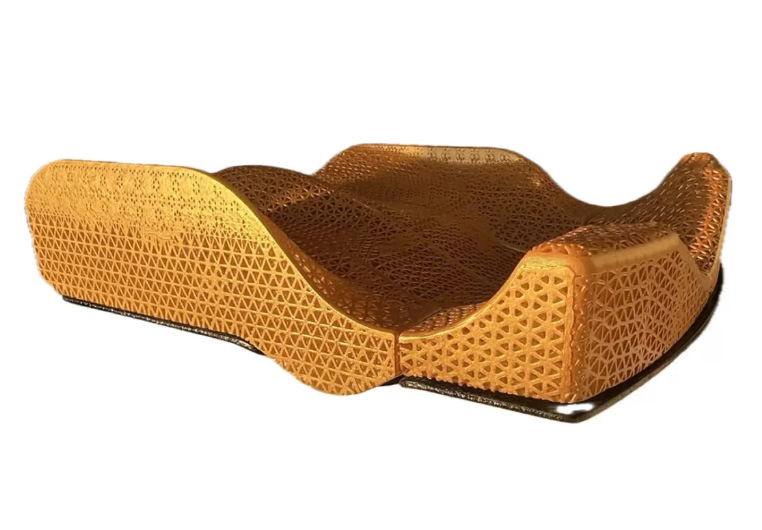
Tarkka joined the Praxis SCI Incubate Program focused on gathering clinical data and pursuing Class II certification, a moderate risk designation that can require extensive testing and regulatory review, assuming it would be the key driver of adoption for their innovative seating system. Over the course of the program, that assumption shifted. Through conversations with people with lived experience (PLEX) of SCI, clinicians, and mentors, Tarkka’s founder, Brett Quigley, realized that early traction depends more on trust, usability, and real-world validation than on regulatory classification or traditional study designs.
Why Tarkka Joined Praxis
Early on, Tarkka shared their desire to explore how data and research could support stronger adoption for their innovative seating system. They entered the program focused on designing a study on key health outcomes that could influence user preference.
Through their work with Praxis, however, the team uncovered the underlying complexity of that pathway. They learned that major outcomes-based clinical studies were not feasible at their current stage of development. More importantly, they realized that market entry, especially in the early phases, depended far more on consumer choice and user preference.
Engaging with Praxis mentors and researchers helped Brett have a better understanding of how to collect evidence and user insights before achieving Class II medical device status, and more importantly, pursuing Class II designation alone wouldn’t automatically improve reimbursement or accelerate product adoption. This reframed the strategy, shifting focus from prioritizing regulatory classification to practical validation, user feedback, and early market traction driven by the needs of PLEX.
Learning from Lived Experience
Direct engagement with Praxis PLEX team members revealed daily realities, such as catheter insertion challenges, preferences for quick cover swaps during cleaning to avoid hard-surface sitting, and community mistrust of unproven products without peer validation. These insights highlighted layered barriers beyond functionality. While feedback validated the need for time saving solutions and better moisture management, it also emphasized the importance of building trust through PLEX engagement and continuous feedback loops.
Engaging with Praxis mentors and researchers helped Brett have a better understanding of how to collect evidence and user insights before achieving Class II medical device status, and more importantly, pursuing Class II designation alone wouldn’t automatically improve reimbursement or accelerate product adoption. This reframed the strategy, shifting focus from prioritizing regulatory classification to practical validation, user feedback, and early market traction driven by the needs of PLEX.
Key Learning and Achievements
Praxis delivered end user feedback that shifted strategies, integrated PLEX insights into training modules, a consumer first approach for super users to foster advocacy, and user testing protocols to build early confidence.
Regulatory guidance clarified the Class II pathway and helped Brett refine his pitch to have greater impact with distributors. In saving both time and other resources, Tarkka is now focused on using that clarity to prioritize practical validation and early distributor relationships rather than pursuing regulatory milestones in isolation.
“It [the program] is valuable. It’s just you might not know how [valuable] until you’ve gone through it,” shared Brett. “You [Praxis] know what people need to know even if they don’t. Having that [knowledge] funneled and directed and focused, takes away the risk.”
How Tarkka has Evolved
Following the program, the clarity and guidance provided helped the team reduce significant risk and make faster, more confident decisions at critical crossroads. Tarkka is entering a new phase of growth. The team is advancing its sit-to-fit custom seating system, forging clinician partnerships, and expanding its shaping technology into defense and aerospace applications.
About Tarkka
Tarkka, an Alberta-based startup founded by Brett Quigley, has developed the Tetrx™ custom seating solution for wheelchairs. Its pre-engineered thermoplastic lattice and carbon fiber composite structures, combined with on-site contouring through the Sit2Fit process, allows fit to be customized to the individual in a single visit. Designed to integrate seamlessly with existing wheelchairs, Tetrx™ addresses pressure injuries, friction, shear, and microclimate issues while supporting optimal posture, extended sit times, and basic hygiene with bleach-safe cleaning. This streamlined sit-to-fit process also reduces the time from fitting evaluation to delivery from months to hours.
About the Praxis SCI Incubate Program
The Praxis Spinal Cord Institute’s Incubate Program is a four-month Program geared towards prototype stage projects with innovation to transform the lives of people with spinal cord injury (SCI). The Program provides targeted end-user product validation, research support, expert mentorship, and access to a commercialization network.