Building Trust and Culturally Safe Care for Indigenous Communities
Trust in health care cannot be assumed; it is earned. For Indigenous communities this means the inclusion of their voices to help shape the care they receive in a respectful and culturally safe way. As noted by the Canadian Medical Association in 2025, reconciliation in health care is an active and evolving priority that requires sustained commitment and ongoing work.
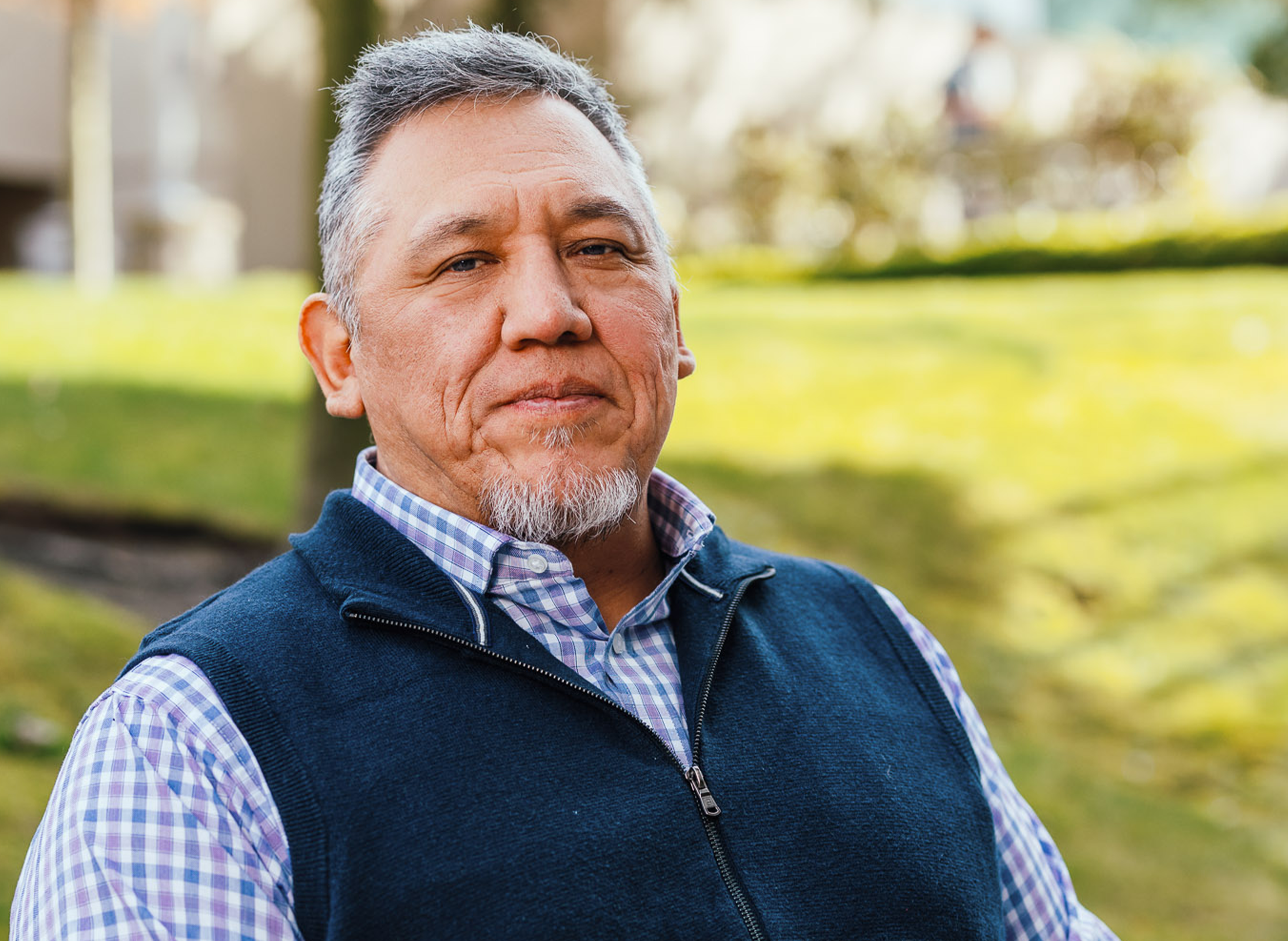
“The health system is not a neutral space, but one shaped by history, harm, and ongoing inequity. For Indigenous people living with spinal cord injury, navigating care means working within systems that were not designed with them in mind,” Praxis Indigenous People’s Liaison Richard Peter.
A member of the Cowichan Tribes on Vancouver Island, Peter has close to 50+ years of lived experience with a T10, AIS-B spinal cord injury. He brings deep community knowledge, trust-based relationships, and lived experience to his work at Praxis.
In-Person Engagement: Listening and Learning
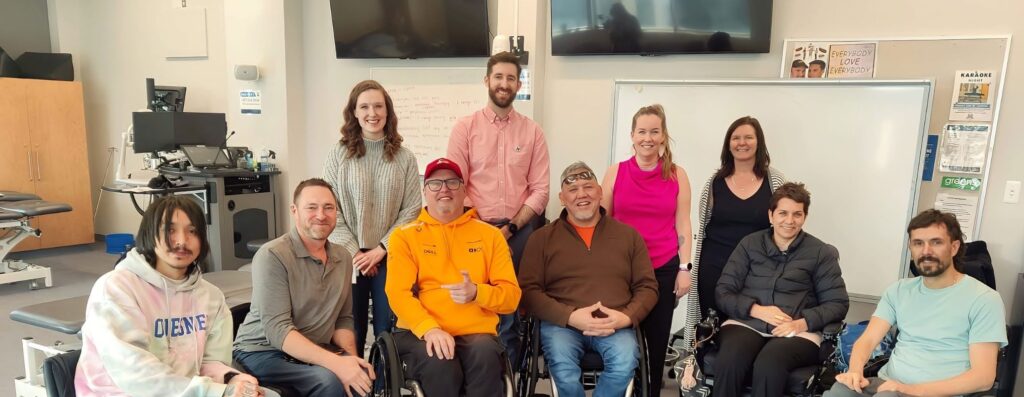
Praxis’ Indigenous engagement initiatives focus on addressing the distinct SCI-related challenges faced by Indigenous peoples by creating culturally safe spaces and welcoming pathways that identify priority health issues and barriers to care, while discussing culturally grounded solutions informed directly by those with lived experience.
- Indigenous Gatherings — These community-focused sessions create culturally safe spaces for Indigenous people living with SCI to share experiences, identify priority health issues and surface community-driven solutions.
- Indigenous Perspectives Sessions in Clinical Workshops — Delivered in partnership with Praxis’ SCI Clinical workshops and webinars, these sessions center around Indigenous voices and storytelling to deepen clinicians’ understanding of distinct SCI related challenges faced by Indigenous patients. They support practitioners in building cultural safety, confidence, and stronger connections to appropriate resources.
“Being physically present signals respect and commitment to Indigenous populations,” says Peter. “Storytelling, shared
space, and listening cannot always be replicated virtually. Trust grows when people feel heard without being rushed or judged.”
Partnerships and Initiatives
Praxis’ partnership with Dr. Davina Banner-Lukaris from the University of Northern British Columbia (UNBC) was highlighted at the Putting Patient First Conference this year. The presentation showcased work focused on co-developing meaningful partnerships and networks for SCI research with Indigenous peoples. Underpinned by collaborative, patient-oriented, and decolonizing research approaches, this project facilitated Indigenous SCI Gatherings with more than 30 participants, including Indigenous people with lived experience of SCI and representatives from SCI and Indigenous health organizations. These gatherings created space for sharing challenges and opportunities and for identifying priorities for future action. Knowledge mobilization activities are underway, including a manuscript currently in development that will synthesize key learnings and outcomes from this work.
Additionally, the Praxis team has started a traditional blanket gifting to honour guests and speakers. The Praxis
blanket, which features an Indigenized butterfly logo and was designed in collaboration with a Coast Salish artist, was first gifted to an Indigenous patient navigator at a session in Vernon. The blanket served as a symbol of respect, gratitude, and connection.
Looking Ahead
Praxis is working hard at being a partner and listener, recognizing that meaningful progress depends on collaboration and respect. Creating Indigenous-led guidance forums and advisory roles are critical, alongside expanded opportunities for Indigenous leadership within SCI care.
Peter adds, “Safety and trust are not outcomes; they are commitments that must be renewed every day.”
Praxis and Indigenous Engagement: Next Steps
- Build sustained, trust-based partnerships
- Amplify Indigenous leadership and voices
- Engage early, meaningfully, and continuously with communities
- Embed cultural safety, humility, and ethical practice
- Enable reciprocal knowledge exchange and co-creation
- Ensure benefits flow back to communities
About Praxis Spinal Cord Institute
Praxis Spinal Cord Institute is a Vancouver-based not-for-profit organization that leads global collaboration in spinal cord injury research, innovation, and care. We accelerate the translation of discoveries and best practices into improved treatments for people with spinal cord injuries.
GET INVOLVED
Indigenous perspectives are critical to Praxis’ mission of improving quality of life and health outcomes of all individuals living with spinal cord injury. Indigenous Peoples’ Liaison Richard Peter is the lead on building relationships and collaborations with the Indigenous community. Richard is supported by a diverse, multi-disciplinary team at Praxis to connect with Indigenous individuals and organizations as well as SCI associations, health care providers, researchers and public policy decision makers to enable inclusion of Indigenous perspectives in SCI research and health care.