
People-Centred SCI Standard

This is the breadcrumbs block. Breadcrumb will populate on actual page.

What are Care Standards?
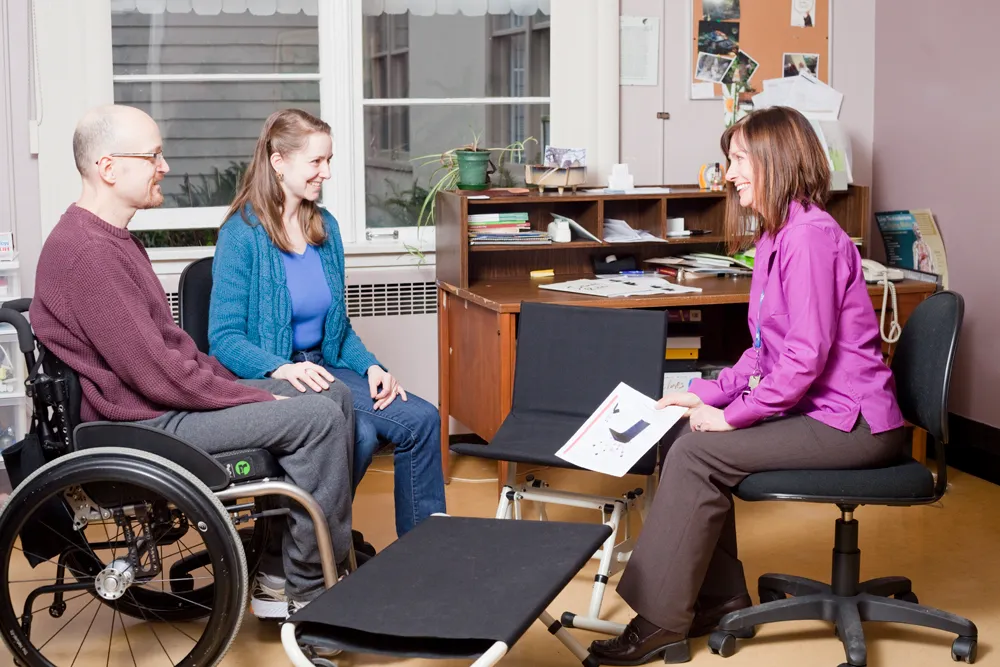
Setting the bar for consistent and high-quality care for SCI.

Care standards are guidelines that help hospitals deliver safe, high-quality care consistently. They act as a roadmap for building stronger, more connected, and resilient health systems.

By using these standards and assessment programs, we can measure how well health systems perform and provide evidence-informed tools to make improvements. The goal is simple: reduce unnecessary differences in care so that everyone in Canada has fair access to safe, consistent, and high-quality health services—no matter where they live.

Before 2010, there were no standards specifically for spinal cord injury (SCI) care in Canada. Praxis changed that by partnering with Accreditation Canada (AC), the country’s leading health care accreditation body, to create the first comprehensive SCI standards for acute care and rehabilitation. These standards, along with an assessment program, were launched in 2012. More than half of our Registry sites (30 trauma and rehabilitation facilities) were accredited with these standards.

What are the Challenges with the Previous Standards?

Raising the bar for SCI care.

To keep improving SCI care—especially during transitions from hospital to rehabilitation to home and community—Praxis partnered with Health Standards Organization (HSO), AC’s sister organization, to identify gaps in the existing standards and assessment program. This work provided a deeper understanding of the journey for people living with SCI and led to two key resources:

  1. Experience Map: Created using photovoice methodology, it captures the experiences of people with SCI in the first 18 months after leaving rehab and returning to their home or community.
  2. An accompanying Insights Report: Summarizes their goals, challenges, and recommendations for improving the overall experience.
    • Insight 1 – When people leave rehab, they have to rebuild their identities, routines, and relationships.
    • Insight 2 – People have to rediscover their relationship with their bodies and health, once they leave rehab.
    • Insight 3 – Access and navigation of care is a significant challenge when people transition out of rehab
    • Insight 4 – When people encounter physical barriers, their routines and sense of belonging or community are disrupted.
    • Insight 5 – The ignorance and behaviour of the general public contributes to challenges as people are transitioning out of rehab.

How is Praxis Advancing the Standard?

Leading the way in people-centred SCI care.

In 2019, using these findings and resources, Praxis and HSO began developing a new standard, the Integrated People-Centred Spinal Cord Injury Rehabilitation Program (CAN/HSO S3402:2024) (the SCI Standard) in English and French. This single, unified framework replaced two previous SCI standards, creating more relevant and meaningful requirements to deliver truly people-centred care for the SCI community.

The new SCI Standard brings key strengths:

  • Across Care Continuum: Applicable from acute care through rehabilitation to community reintegration, with consideration for the transitions in-between.
  • Enhanced Quality of Care: Adoption of the SCI Standard guides care teams deliver safer, more consistent, and higher-quality care.
  • Person-Centred Care: Individualized care plans are created in collaboration with the person living with SCI, ensuring that their goals and preferences are reflected and they are considered part of the care team.
  • Led by Lived Experience: Developed by technical and advisory committees, with 12 of the 37 members being people with lived experience of spinal cord injury (PLEX), whose perspectives guided every step of the process.

The SCI Standard emphasizes the collaboration between healthcare workers, the individual with SCI, and their families along the care journey with key topics including:

  • Integrated systems of care and community reintegration
  • A specialized SCI rehabilitation program that begins in acute care
  • Peer support from people with lived experience
  • Considerations for pediatric and older adult populations
  • Specialized training and resources for workforce support
  • Practicing cultural safety to provide safe, equitable care for everyone
  • Continuous improvement in research, innovation, and quality of care

What is Next?

Helping Hospitals Get Accredited.

Praxis works closely with Health Standards Organization (HSO) and Accreditation Canada to promote the SCI Standard nationwide. Thanks to this collaboration, many acute and rehabilitation hospitals have already adopted the previous Acute and Rehab SCI Standards through the Qmentum Accreditation Program. Now, hospitals can begin integrating the new SCI Standard into their accreditation processes, ensuring safer, more consistent person-centred care.

To learn more about how your care team can start adopting the new SCI Standard, contact us at clinical@praxisinstitute.org.


Additional Resources

Interested in learning more?
Read this brief summary of the new SCI Standard here.
Or download the Executive Summary for a more comprehensive overview of the key updates.

Ready for the full version?
Read the SCI Standard
[English version] [French version]

Advocate for the new SCI Standard in your facility.
Spread the word about the benefits of using the new SCI Standard in clinical care.
Download the poster for health care providers
Download the poster for PLEX