Learning from Lived Experience: Praxis SCI Clinical Education at Dalhousie University
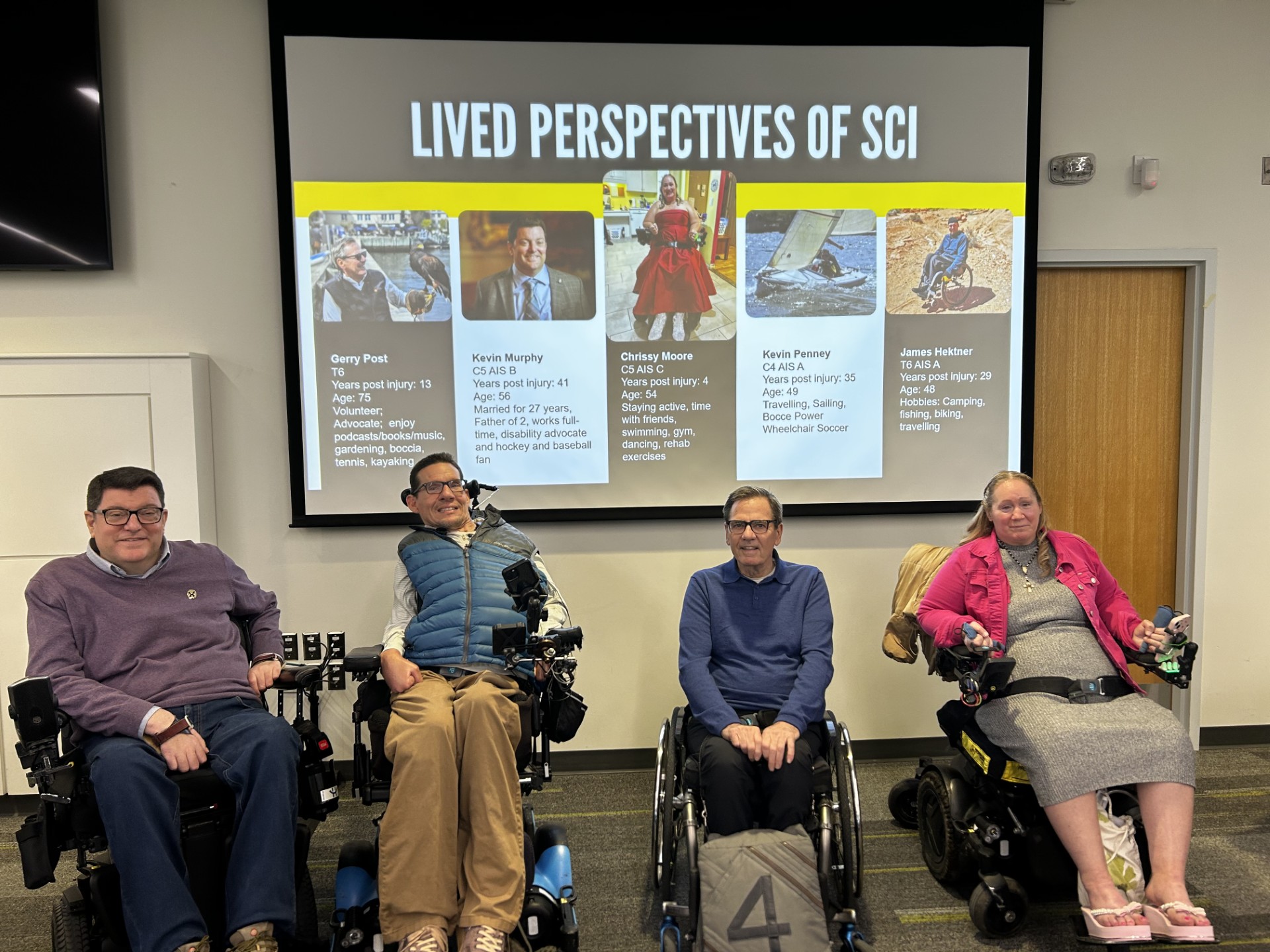
Future occupational therapists and other health profession students at Dalhousie University recently participated in a Praxis SCI Clinical Education workshop designed to bring lived experience directly into healthcare training. By learning from both clinicians and people living with spinal cord injury (SCI), students explored the realities of life beyond diagnosis and treatment, gaining perspectives that support more collaborative, person-centered care.
One of the panelists was Kevin Penny, who has lived with SCI since 1991 and has spent decades supporting students with disabilities, serving on nonprofit boards and advocating for the inclusion of people with lived experience in health and community settings. For Kevin, inclusion means more than inviting people with lived experience into the conversation. It means giving them a meaningful role in shaping it.
“People with lived experience shouldn’t simply be the subject of conversations about disability. They should help lead them.” That perspective is at the heart of Praxis’ approach to SCI education: creating opportunities for the next generation of healthcare professionals to learn not only about SCI, but from the people who live it.
The impact of the approach was visible throughout the session, according to panelist Kevin Penny. “Seeing students respond to firsthand stories showed how different the experience was from learning through a textbook, webinar or video.” he said. Hearing directly from people with SCI, Penny believes, offers students insights that traditional educational formats alone cannot provide. Around 75 students attended even though the session was not mandatory, and some stayed afterwards to ask questions privately, extending the conversation beyond the formal workshop.
The session in collaboration with Dalhousie University reflects a broader approach behind Praxis’ SCI Clinical Education. Praxis runs in-person workshops and online webinars designed to bring practical, evidence-informed SCI education to clinicians and care teams. The program was developed in part to address a persistent gap in care: specialized SCI expertise is often concentrated in larger urban centres, while clinicians in regional and rural communities may be caring for people with complex injuries without the same access to specialized training. Praxis has delivered 50+ workshops and webinars in partnership with diverse institutes and health authorities.
A defining feature of the workshops and webinars is that they are co-designed with PLEX from planning through delivery. PLEX helps identify priorities through surveys, polls and ongoing conversations, shape the content and format of sessions, and participate in the sessions themselves by sharing their experiences alongside clinicians. Recent topics have included pressure injuries, bowel and bladder management, sexual health, aging, physical activity and psychological adjustment. The aim is to ensure clinical education reflects not only professional priorities, but also the issues that matter in everyday life for people living with SCI.
Kevin has long believed that first-hand experience belongs in those conversations. “I’ve always been a huge proponent of educating people with lived experience and first voice,” he said. He also noted the importance of compensating PLEX participants for the knowledge they bring, rather than treating their contribution as voluntary storytelling.
“Listen first.” It is a small shift in mindset, but one that can move SCI care away from assumptions and toward a more collaborative, person-centered partnership where individuals are recognized as experts in their own lives and care.
Kevin’s experiences help illustrate why lived experience is a core component of the Praxis SCI Clinical Education model. Over 35 years, Kevin has encountered clinicians who listened closely and others who made assumptions based on his wheelchair before hearing what he had to say. “I live this every day, and I’m the expert,” he said. “Now we need to work together to find a solution.” Clinical expertise remains essential, but so does recognizing that a person living with SCI brings years of knowledge about their own body, routines, goals and needs.
That lesson is especially important for students entering healthcare professions. Kevin believes similar sessions could benefit nurses, physicians and other healthcare professionals, not only occupational therapy and physiotherapy students. Praxis’ own workshop feedback points in the same direction: clinicians consistently report that hearing directly from people with lived experience strengthens their understanding of the challenges and priorities associated with SCI and supports more person-centered care.
The need for this kind of education can be even greater outside major urban centres. Having grown up in rural Nova Scotia, Kevin has seen how geography can shape access to transportation, healthcare services and accessible infrastructure. “Supports that are needed in rural communities may be different than supports that are needed in urban communities,” he said.
That gap is one of the reasons Praxis takes SCI clinical education directly into regional communities instead of relying solely on centralized specialist care. By bringing clinicians, people with lived experience and families into the same conversation, the workshops aim to strengthen local knowledge, build capacity and reduce disparities in SCI care. Kevin would like to see that model reach even further. “I think there should be a road show,” he said. “That’s where the impact happens.”
The workshop at Dalhousie University offered a powerful example of what that impact can look like in practice: future clinicians learning directly from people whose lives will one day intersect with the care they provide. Kevin’s advice to them is equally simple: “Listen first.” It is a small shift in mindset, but one that can move SCI care away from assumptions and toward a more collaborative, person-centered partnership where individuals are recognized as experts in their own lives and care.